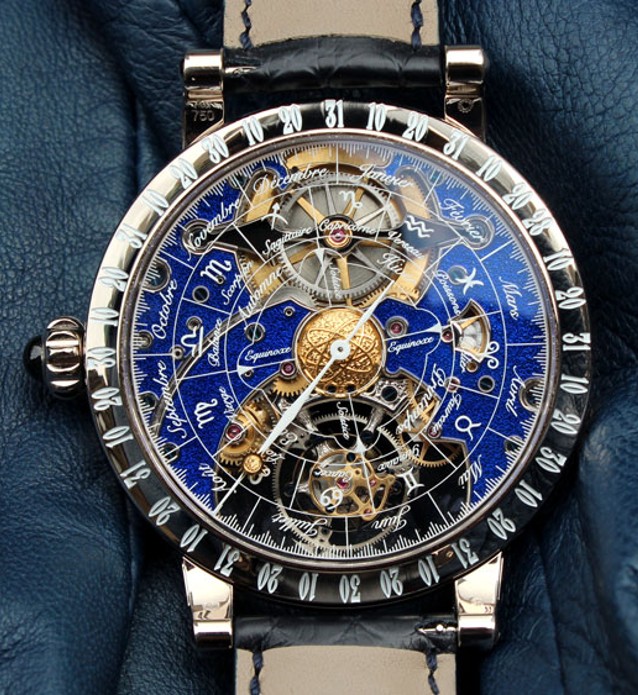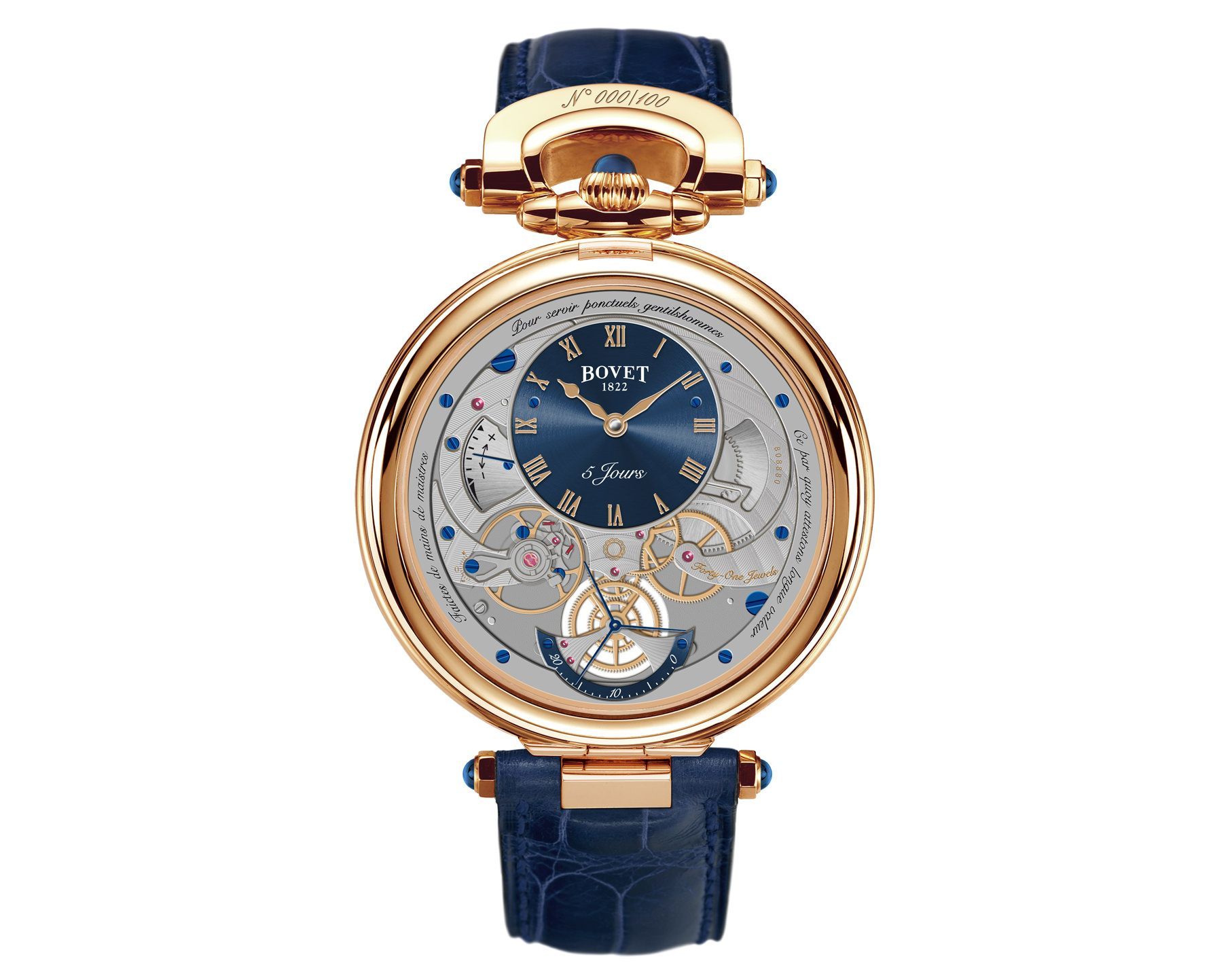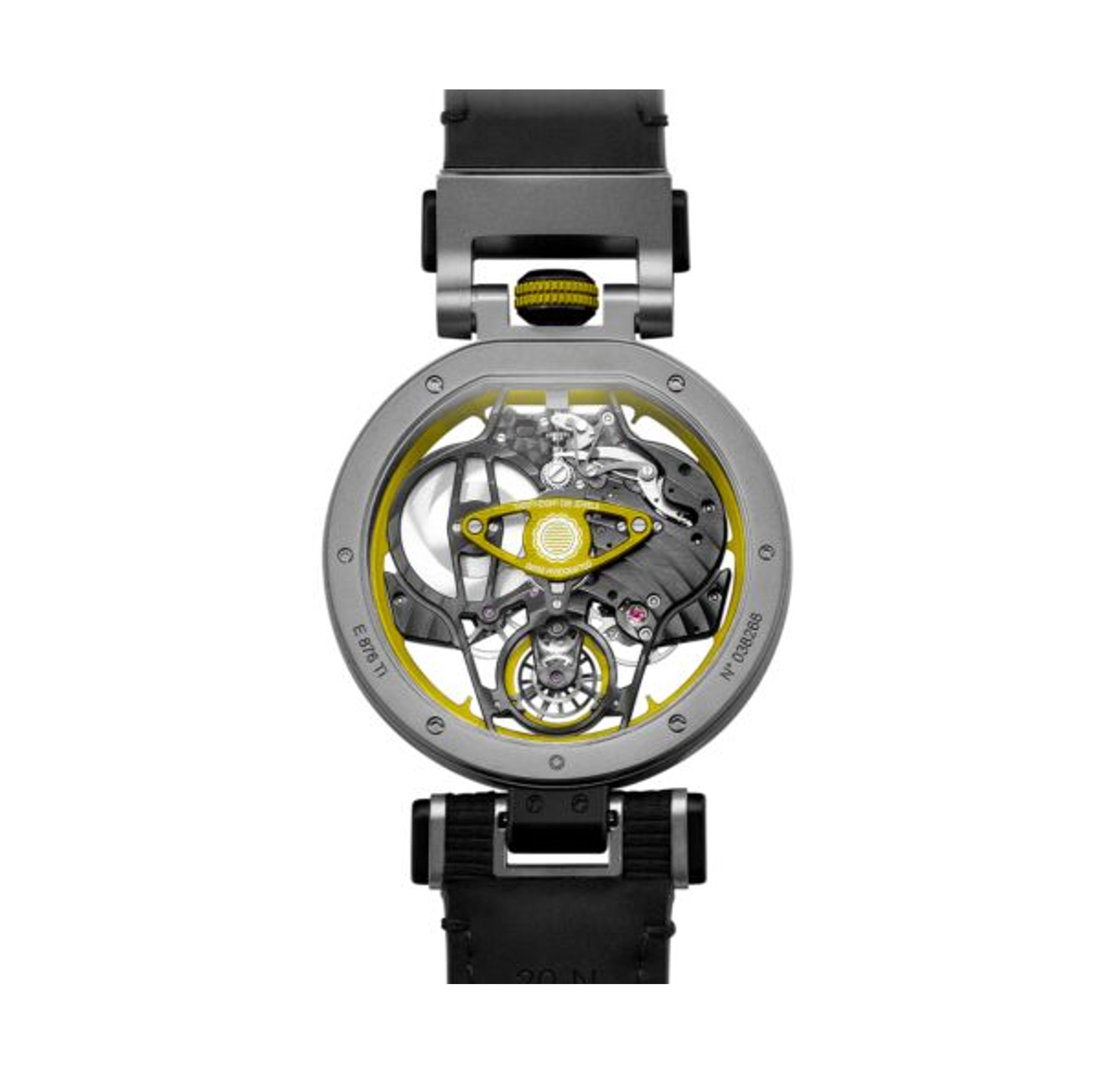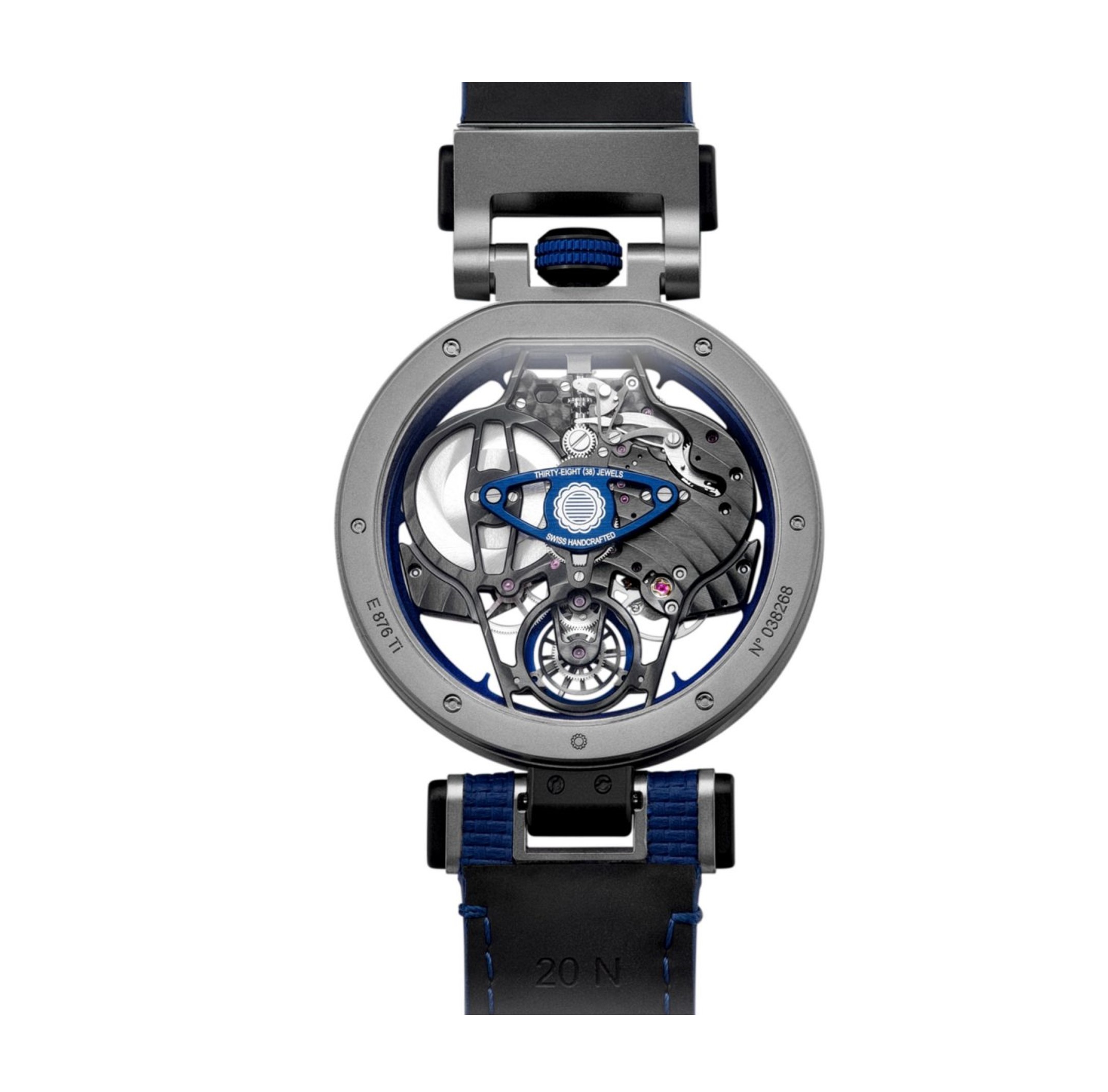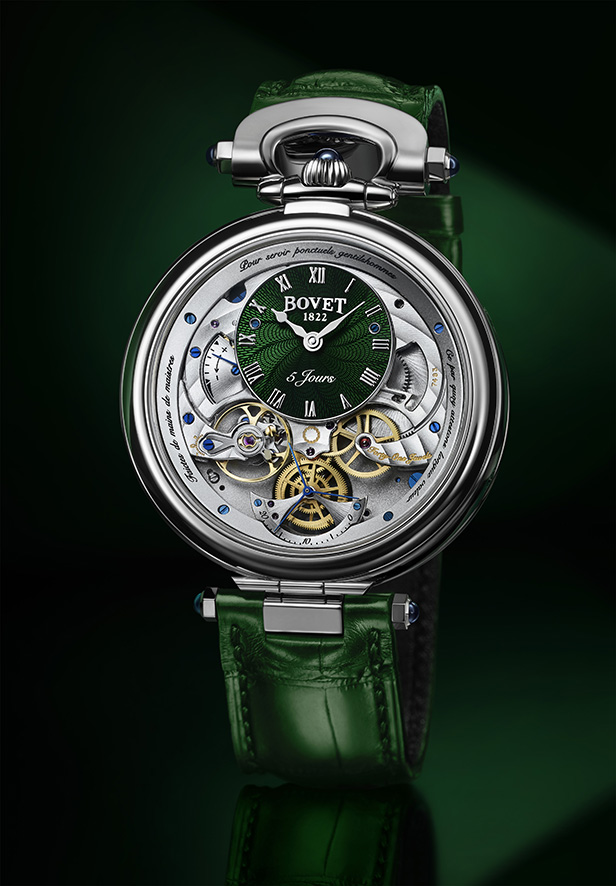
The Récital 20 Astérium® seamlessly continues the tradition set by its illustrious predecessor, reprising the characteristic shaped case to present an unprecedented mechanical display that showcases the volumes and decoration of the timepiece. Despite its complexity, setting this timepiece is as quick and easy as for a timepiece with a simple calendar mechanism. The same applies when determining the position of the stars in the sky. To do this, simply point the arrow of the sky map hand northwards. The ellipse opened by this sky map hand outlines the part of the sky that is visible from the wearer’s position at the moment of observation, assuming that the observer is positioned in the center of the elliptical window and enjoys a 360° view.

The House of BOVET
The year 2006 was filled with positive developments for BOVET 1822. Within a few months, Pascal Raffy successively added BOVET 1822 Manufacture de Cadrans, DIMIER 1738 Manufacture de Haute Horlogerie, as well as the Château de Môtiers to the House of BOVET.
These acquisitions ensured the complete independence of the House and positioned it to raise its quality standards even further. Collectors, specialists, and keen observers of the watch industry have ever since saluted the technical advancements introduced by BOVET, while remaining in complete harmony with the tradition of watchmaking arts that have made the House so successful for almost two centuries.